Birthright citizenship — the promise that if you're born on American soil, you're an American — is written into the 14th Amendment of the Constitution. It has been the law for more than 150 years. Recently the Supreme Court reaffirmed it, ruling that President Trump could not erase it with a stroke of his pen.
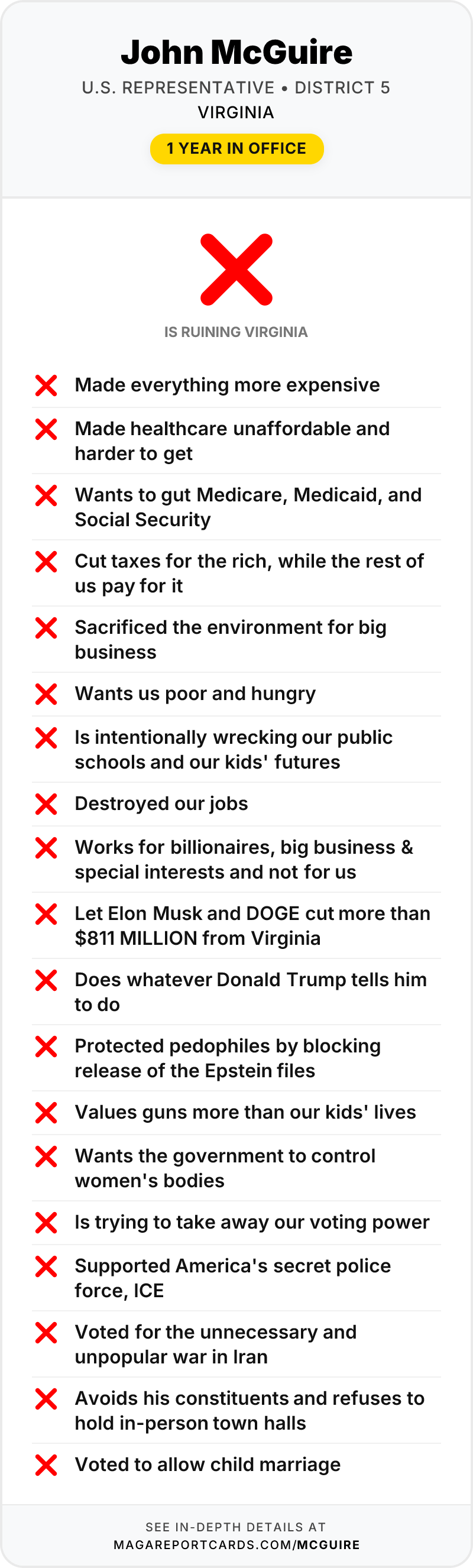
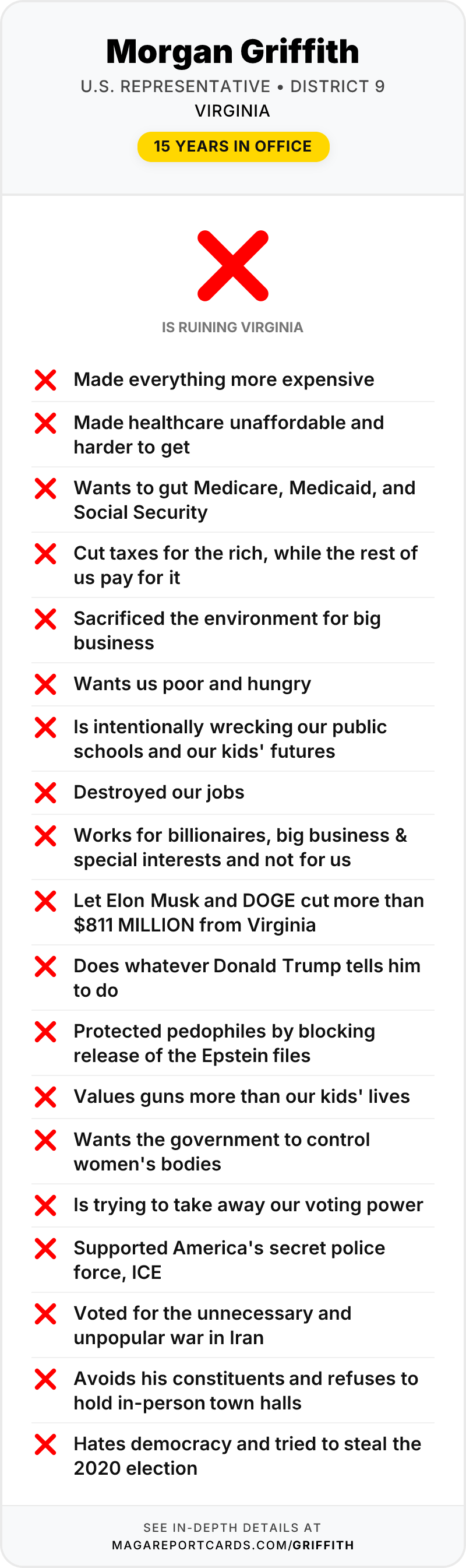
Two Virginia congressmen took that as a challenge. Within weeks, John McGuire and Morgan Griffith each rolled out bills to chip away at birthright citizenship through Congress instead.
McGuire's bill: targeting the kids of immigrants
Rep. McGuire, who represents Virginia's 5th District, introduced the "Birthright Citizenship Clarification Act of 2026." The bill would deny automatic citizenship to some children born in the United States — specifically, children whose mother is here unlawfully or on a temporary visa and whose father is not a citizen, The Hill reported.
McGuire's move is a direct attempt to get around the Supreme Court. The Court struck down Trump's executive order, but Justice Kavanaugh suggested Congress might be able to change the underlying federal statute. McGuire is trying to do exactly that — turning a rejected executive order into permanent law that would leave some U.S.-born babies without U.S. citizenship.
Griffith's bill: coming for Puerto Rico and Guam
Rep. Griffith, who represents Virginia's 9th District, went a different direction with the "End Birthright Citizenship for Territories Act." His bill would end automatic citizenship for babies born in Puerto Rico, Guam, the U.S. Virgin Islands, and the Northern Mariana Islands starting in 2027, unless a parent is already a citizen or green-card holder.
Griffith framed it as cracking down on "birth tourism." But critics called it what it is. Neil Weare of the group Right to Democracy called the bill "dangerous and unconstitutional," warning that as written it could create uncertainty for people born in the territories after 2026. And Adi Martinez-Roman, the group's other co-director, noted the bill would unilaterally rewrite the Northern Mariana Islands' governing Covenant, which requires mutual consent to change citizenship rules.
Put plainly: Griffith wants Congress to decide which babies born on American soil in the territories get to be Americans — and his critics warn the bill as written could leave families across the territories unsure where they stand.
Whose problem does this solve?
Here's the question worth asking: whose life gets better because of these bills?
Not the families in Virginia's 5th and 9th Districts struggling with grocery prices and health care costs. Not the small towns losing hospitals and jobs. Stripping citizenship from babies doesn't lower anyone's bills or bring back a single job.
What it does do is generate headlines, rev up the anti-immigrant base, and pick a fight with the Constitution itself. McGuire and Griffith could be working on the things their constituents actually struggle with. Instead they're competing to see who can go furthest in tearing up a 150-year-old American guarantee.
The bottom line
The Supreme Court already said the president can't end birthright citizenship by decree. Rather than accept that, two Virginia Republicans are trying to do it through the back door — one by targeting the children of immigrants, the other by targeting babies born in Puerto Rico, Guam and the other territories to parents who aren't citizens or green-card holders.
It's cruel, it's almost certainly unconstitutional, and it does nothing for the people they were elected to serve.
Sources
- "House Republican introduces Birthright Citizenship Clarification Act to codify Trump executive order," The Hill, July 9, 2026.
- "Republicans Want to End Birthright Citizenship in US Territories," Newsweek, July 20, 2026.