Update, September 23, 2026: Mackenzie has returned the money. The Morning Call reported on July 30, the day this post was published, that he gave back Kidan's $2,600 donation; his spokesperson said it was to "avoid even an appearance of impropriety." The post below was written before that and is otherwise unchanged.
Here is a timeline. It takes eleven days.
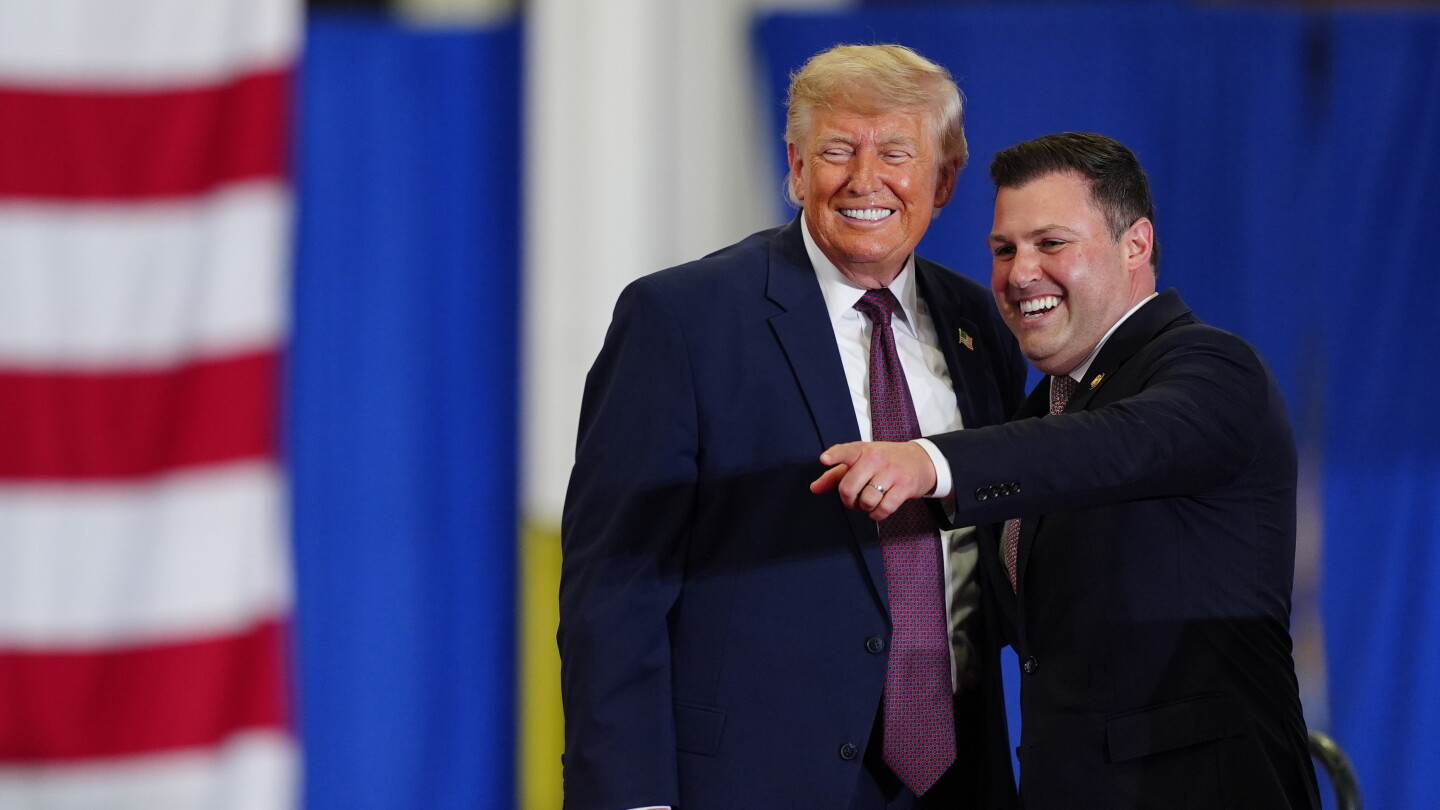
- June 23, 2026 — Donald Trump travels to Pennsylvania's 7th District to campaign for Ryan Mackenzie.
- June 30, 2026 — Adam Kidan, a convicted fraudster and longtime Republican megadonor, gives $2,600 to Mackenzie's joint fundraising committee.
- July 3, 2026 — Trump pardons Adam Kidan.
NOTUS reporter Avani Kalra put that sequence together on July 29. NOTUS called the recipient Mackenzie's leadership PAC; FEC records show the check went to Mackenzie for America, a joint fundraising committee that splits its money among his campaign, his leadership PAC and the Pennsylvania Republican Party. The $2,600 to Mackenzie is Kidan's most recent federal political contribution on record.
Who Adam Kidan is
Kidan isn't a garden-variety white-collar defendant. He was a central figure in the Jack Abramoff scandal — the lobbying and influence-peddling case that produced criminal convictions across Washington in the mid-2000s and became the modern shorthand for money buying government.
Kidan pleaded guilty to conspiracy and wire fraud. He served roughly two and a half years in prison starting in 2006. He was ordered to pay $21,701,015.45 in restitution, plus interest. (NOTUS put the figure at $217 million; the court-ordered amount is $21.7 million.)
That's the man Trump pardoned three days after he wrote a check to a congressman Trump had just campaigned for.
What Mackenzie says
To be fair to him, Mackenzie's office denies any involvement. Spokesperson Arnaud Armstrong told NOTUS:
"Congressman Mackenzie has never advocated for a pardon from the President on anyone's behalf."
The White House offered its own defense. Press Secretary Karoline Leavitt said the president "finds it detestable that anyone would even attempt to profit off pardons."
Take both statements at face value. The problem doesn't go away.
Nobody has to prove that Mackenzie picked up a phone. The question in front of him is much simpler, and it's one he can answer today: is he keeping the money?
A man convicted in the most famous corruption scandal of the last quarter century donated to his fundraising committee and was pardoned seventy-two hours later. There is one obvious thing a congressman does in that situation, and it costs him $2,600 to do it. As of this writing, there's no indication he's done it.
This wasn't just Mackenzie
Kidan spread money widely, and Pennsylvania got a lot of it. Per NOTUS, he gave roughly $270,000 to Trump-affiliated committees during the 2024 cycle. In 2025 and 2026 he gave to swing-district House Republicans including Rob Bresnahan, Brian Fitzpatrick, and Scott Perry in Pennsylvania — plus Zach Nunn in Iowa, Jim Jordan in Ohio, Mike Rogers (MI)'s Senate campaign in Michigan, and Stacy Garrity's run for Pennsylvania governor.
In April 2026 alone he gave $22,445 to a Jim Jordan committee, $7,231 to Rogers, and $3,500 to Zach Nunn.
So this is a donor with a fraud conviction, an eight-figure restitution order NOTUS says it is unclear he ever paid in full, and an active checkbook aimed at Republicans in the tightest races — and at the chair of the House Judiciary Committee, the committee with jurisdiction over the Justice Department.
Why this matters in the Lehigh Valley
Mackenzie represents one of the most competitive districts in the country. Voters there are going to hear a lot this fall about affordability, tariffs, and health care costs.
This story is about something more basic than any policy dispute: whether the pardon power — the one presidential authority with no appeal, no review, and no check — has a price list.
If a donation to a well-placed Republican's committee is followed within days by a pardon, then two things are true at once. Wealthy people with criminal convictions have a route to a presidential pardon that ordinary people don't. And the members of Congress who are supposed to be a check on that behavior are on the receiving end of the money.
Mackenzie's office says he didn't ask for the pardon. Fine. He can prove he wants nothing to do with it by giving the $2,600 back and saying so publicly.
Until he does, this is what accepting the money means: a congressman keeping a check from a man Trump excused, in the middle of an election, while telling voters he's on their side.
Source
- Avani Kalra, Megadonor Received Trump Pardon Three Days After Donation to Pennsylvania Congressman, NOTUS (July 29, 2026). Republished by Spotlight PA. Photo: Julia Demaree Nikhinson/AP, via NOTUS.